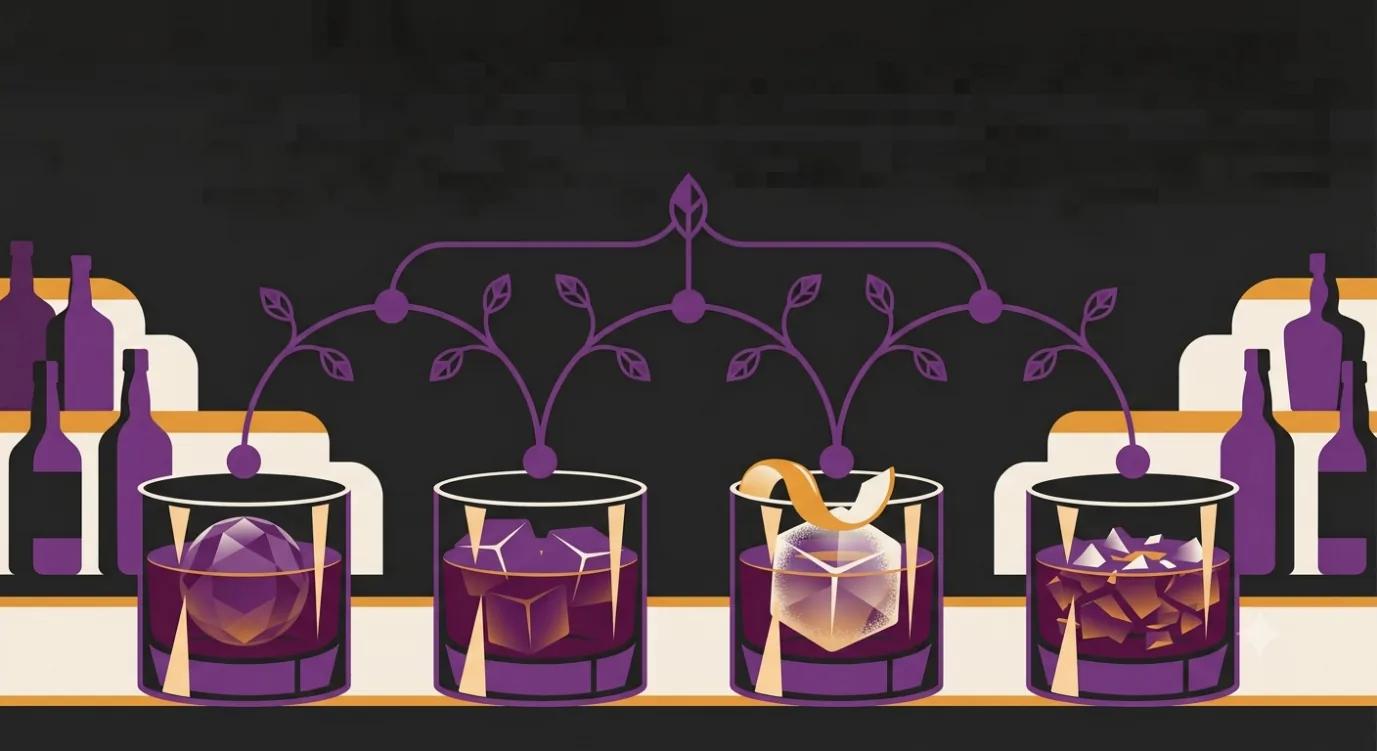
Someone slid onto the stool at the end of my bar once and said, a little apologetically, that they "didn't really like Negronis, but wanted to." I love that sentence. It is the whole game in nine words. Because here is the secret the back bar has been keeping from you: the Negroni is not one drink. It is a family, and most of the family is a single bottle away.
Keep the Campari. Keep the sweet vermouth. Change only the third bottle, and the drink changes its name, its mood, and its manners. That is the entire trick. Learn one template and you have quietly learned four or five cocktails, plus a couple of the best happy accidents in the business.

It started as a swap too
The Negroni itself was a substitution. Rewind to Florence, 1919. Count Camillo Negroni was a regular who had spent time in America and the American West, and he liked his Americano, that gentle mix of Campari, sweet vermouth and soda water. One afternoon he asked his bartender, Fosco Scarselli, at Caffè Casoni, to stiffen it up: hold the soda, pour in gin instead.
Scarselli made the swap and, so the story goes, changed the garnish from the Americano's lemon to a slice of orange - a small signal to the rest of the bar that this was the Count's drink, not the usual. One bottle out, one bottle in, and a legend was poured.
So the founding drink of the whole family is itself proof of the method. If a soda-for-gin swap could create the Negroni, imagine what the other swaps can do.
One template, a whole family
Here is the master shape, the one you never change: equal parts Campari and sweet vermouth, plus a third bottle. Move that third bottle and you travel the family tree.
- Swap gin for bourbon and you get the Boulevardier - richer, sweeter, built for a cold night.
- Swap gin for prosecco and you get the Sbagliato - lighter, fizzy, lower in proof.
- Swap gin for soda water and you are back at the Americano - the long, easy ancestor that started it all.
Two of those have origin stories as good as the drinks. The Boulevardier is named for a 1920s Paris magazine run by an American expat, Erskine Gwynne, and its recipe was set down in print by legendary bartender Harry McElhone in his 1927 book, Barflies and Cocktails. The Sbagliato was born at Bar Basso in Milan, and its name tells on it.
"Sbagliato" is Italian for "mistaken." As the story goes, bartender Mirko Stocchetto reached for the gin, grabbed the sparkling wine by accident, and poured it in anyway. The bar liked the mistake enough to keep it, prosecco and all.
The cousin who broke the rule
Every family has one, and the family tree has the White Negroni. This one does not keep to the "change one bottle" rule. It keeps the gin and swaps out the two red ingredients instead: Campari becomes Suze, a bracing French gentian aperitif, and the sweet vermouth becomes Lillet Blanc.
It is a modern invention, not an old one. British bartender Wayne Collins mixed it up in Bordeaux around 2001, reaching for local French bottles, and it stuck. Pale gold instead of ruby, drier, with a cleaner and more floral kind of bitterness. Proof that once you understand the template, you can bend it as well as follow it.
Why the method has to follow the bottle
Here is the part most home bartenders miss. Swapping the third bottle does not just change the flavor. It changes the physics, which means it changes how you build the drink.
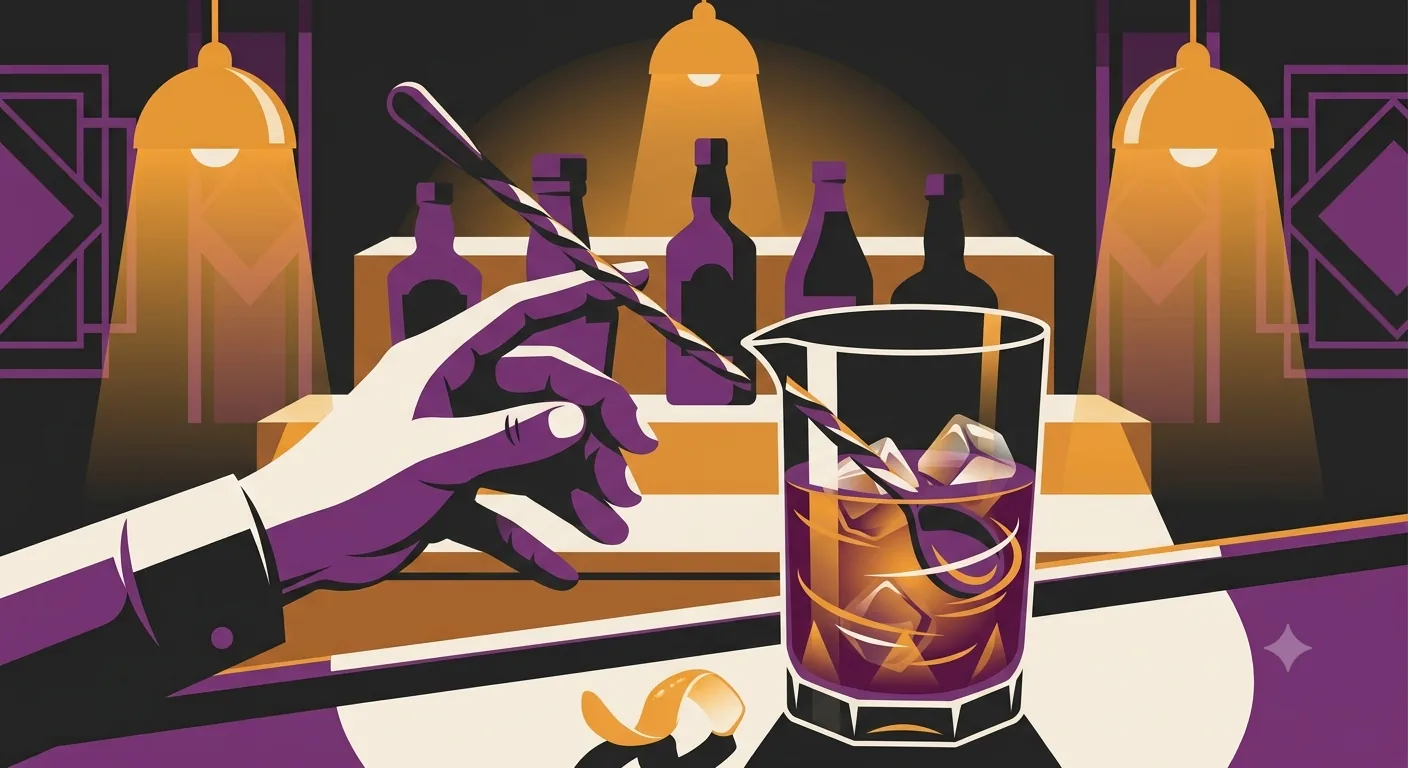
A spirit base, gin or bourbon, arrives at full strength and stone cold from nowhere. You stir it over ice to chill it and, just as importantly, to dilute it. That water is not a flaw; it is an ingredient, softening the bitterness and opening up the aromatics. Stir, then strain over fresh ice.
A sparkling base plays by opposite rules. The whole point of a Sbagliato is the bubbles, and stirring flattens them dead. So you build it in the glass and top with the prosecco last, never stirring the fizz away. The lower alcohol also means you are not chasing the same heavy dilution. The Americano works the same way: build, top with soda, keep the sparkle. Match the method to the bottle and every version lands the way it should.
Reading the bitter-to-sweet dial
Think of the family as a single dial that runs from bitter to sweet to light, and pour for the person in front of you.
- Negroni: the balanced benchmark, bitter and botanical in equal measure. Pour for the confident drinker who wants the real thing.
- Boulevardier: slides toward rich and sweet, with bourbon's vanilla and oak rounding off Campari's edge. Perfect for the friend who "doesn't like Negronis" and loves brown spirits.
- Sbagliato: slides bright and easy, effervescent and lower in proof. The aperitivo-hour crowd-pleaser.
- Americano: the lightest of the lot, long and refreshing. Made for a hot afternoon and a long conversation.
- White Negroni: still bitter, but in a paler, drier, more floral key. For the Negroni devotee who wants a variation that still bites.
That regular who "wanted to" like Negronis? I poured them a Boulevardier first, then walked them up the dial over a few weeks. Last I saw them, they were ordering the real thing, orange peel and all.
Try It Tonight: The Negroni Template
Master this one and the rest of the family is a bottle away. It is the classic 1:1:1, stirred, and it takes about a minute.
Ingredients
- 1 oz (30 ml) gin
- 1 oz (30 ml) Campari
- 1 oz (30 ml) sweet vermouth
- Orange peel, to garnish
Method
- Add the gin, Campari and sweet vermouth to a mixing glass filled with ice.
- Stir for around 20 to 30 seconds, until well chilled and properly diluted.
- Strain over one large ice cube in a rocks glass.
- Express an orange peel over the top, then drop it in.
Now run the swaps. For a Boulevardier, replace the gin with 1.5 oz (45 ml) bourbon or rye and stir as above. For a Sbagliato, skip the stirring: build 1 oz (30 ml) Campari and 1 oz (30 ml) sweet vermouth over ice, then top with about 2 oz (60 ml) chilled prosecco. For an Americano, build the same Campari and vermouth over ice in a tall glass and lengthen with 2 to 3 oz (60 to 90 ml) soda water.
One template, a whole afternoon of variations. That is the beauty of the Negroni: it never really asked you to memorize a family of drinks. It asked you to learn one, and pay attention to the third bottle. Pull up a stool next time and I will pour you the branch that suits you.