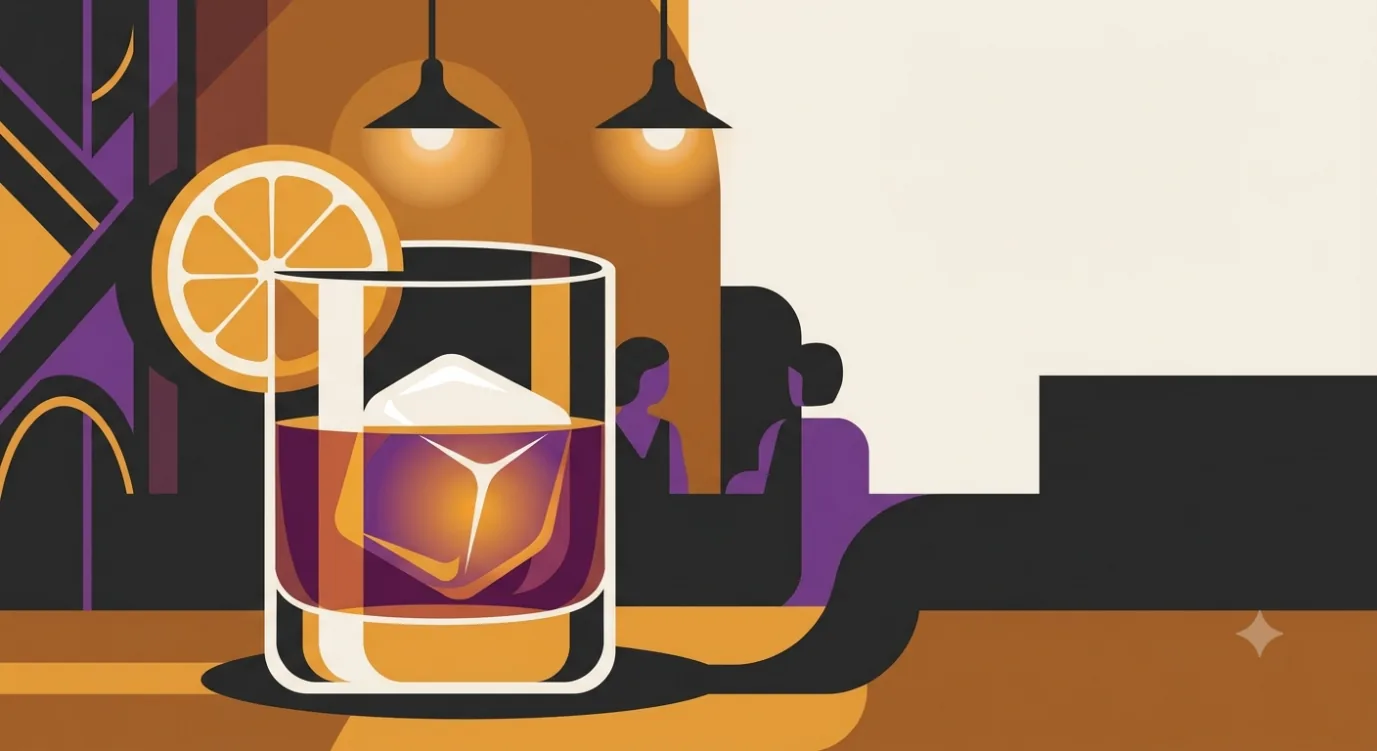
I have watched a hundred people order their first Negroni, and it goes the same way every time. They order it because it looks magnificent, all glowing red with a big clear cube and a coin of orange, and then they take one confident sip and their whole face folds in on itself like a deck chair.
Nine times out of ten they put the glass down and say some version of: "I think mine's off." It isn't off. It's a Negroni. It is supposed to punch you gently in the mouth.
Here's the strange part, and the reason I keep pouring them. A month later that same person walks in, sits down, and orders a Negroni without glancing at the menu. Nobody loves their first one. Almost everybody loves their tenth. That is not a coincidence and it isn't snobbery. It's your tongue quietly rewiring itself, and it might be the most worthwhile upgrade a drinker can make.
Your Tongue Thinks It's Being Poisoned
Bitterness is the only flavor we are born actively distrusting. Sweet says "energy." Salty says "minerals." Sour says "careful, maybe." Bitter says "this might kill you," and it says it loudly, because for most of human history it was right. An enormous share of the plant compounds that will genuinely hurt you taste bitter, so evolution handed us an alarm system with roughly two dozen separate bitter receptors, all wired to the same instruction: spit it out.
Hand a baby something bitter and you get a full-body rejection, no training required. That alarm never really switches off. What changes is that you learn to overrule it.
Which is what an "acquired taste" actually is. It isn't your tongue giving up. It's your brain quietly gathering evidence that this particular bitter thing has never once hurt you, and that it keeps showing up alongside good things: a cold glass, the end of a workday, someone you like sitting across the table. Repetition, plus zero consequences, plus decent company, and the alarm gets downgraded to a doorbell. Coffee already did this to you. So did dark chocolate. The Negroni is just the last boss.
A Bitter Habit, 160 Years in the Making
The Italians worked all this out long before anyone was measuring taste receptors. In 1860 a man named Gaspare Campari mixed a secret recipe of botanicals in Novara: a fierce red bitter he never wrote down for anyone, and which his company has kept quiet for more than a century and a half since. It became the spine of an entire ritual.
That ritual is the aperitivo, and the word comes from the Latin aperire, to open. The logic is that something bitter, taken before you eat, opens the appetite and gets the whole system ready for dinner. Not a nightcap. Not a party drink. A small, bracing, deliberately bitter thing, drunk early, usually standing up, with something salty within arm's reach.
The aperitivo may be the only cultural tradition built entirely around a flavor humans are born hating. Italy looked at the poison alarm, poured it over ice, put an olive next to it, and made it the best hour of the day.
How the Negroni Tames the Beast
If bitterness were the whole story you would just drink Campari on its own, and you would hate it. (Try it. I'll wait.) The Negroni is clever because it never asks you to enjoy bitterness naked. It puts three levers in your hand and pulls all of them at once.
- Sugar. Sweet vermouth doesn't only add sweetness, it actively suppresses how much bitterness you perceive. Put sugar and bitter on the tongue together and each one turns the other down. The vermouth is a volume knob.
- Cold. Taste intensity climbs as a drink warms toward body temperature. A properly cold Negroni is a restrained Negroni; the same liquid at room temperature is a snarling one. This is why a warm Negroni tastes like punishment.
- The gin. Juniper and botanicals don't reduce the bitterness, they give it somewhere to go. Gin bridges the herbal end of the Campari and the wine end of the vermouth, and its backbone stops the whole thing reading as a soft, sweet fruit drink.
Take any one of the three away and it collapses. No sugar and it's medicine. No cold and it's a fight. No gin and you've made an Americano, which is a lovely drink but a completely different animal.
That is the bit worth internalizing: bitterness in a good drink is never the point on its own. It's a counterweight. It exists to stop everything else turning into syrup, the same way acid does the job in a sour. Sweetness with nothing pushing back is just cordial.
Try It Tonight: The Negroni
Equal parts, stirred, one big cube, orange oil over the top. Three bottles and about ninety seconds. If you own gin, Campari and sweet vermouth, you own a Negroni for the rest of your life.
Ingredients
- 1 oz (30 ml) gin
- 1 oz (30 ml) Campari
- 1 oz (30 ml) sweet red vermouth
- 1 wide strip of orange peel, to garnish
Method
- Drop a large cube into a chilled rocks glass. One big rock, not a handful of small ones. You want this cold and slow, not watery.
- Add the gin, Campari and sweet vermouth straight into the glass.
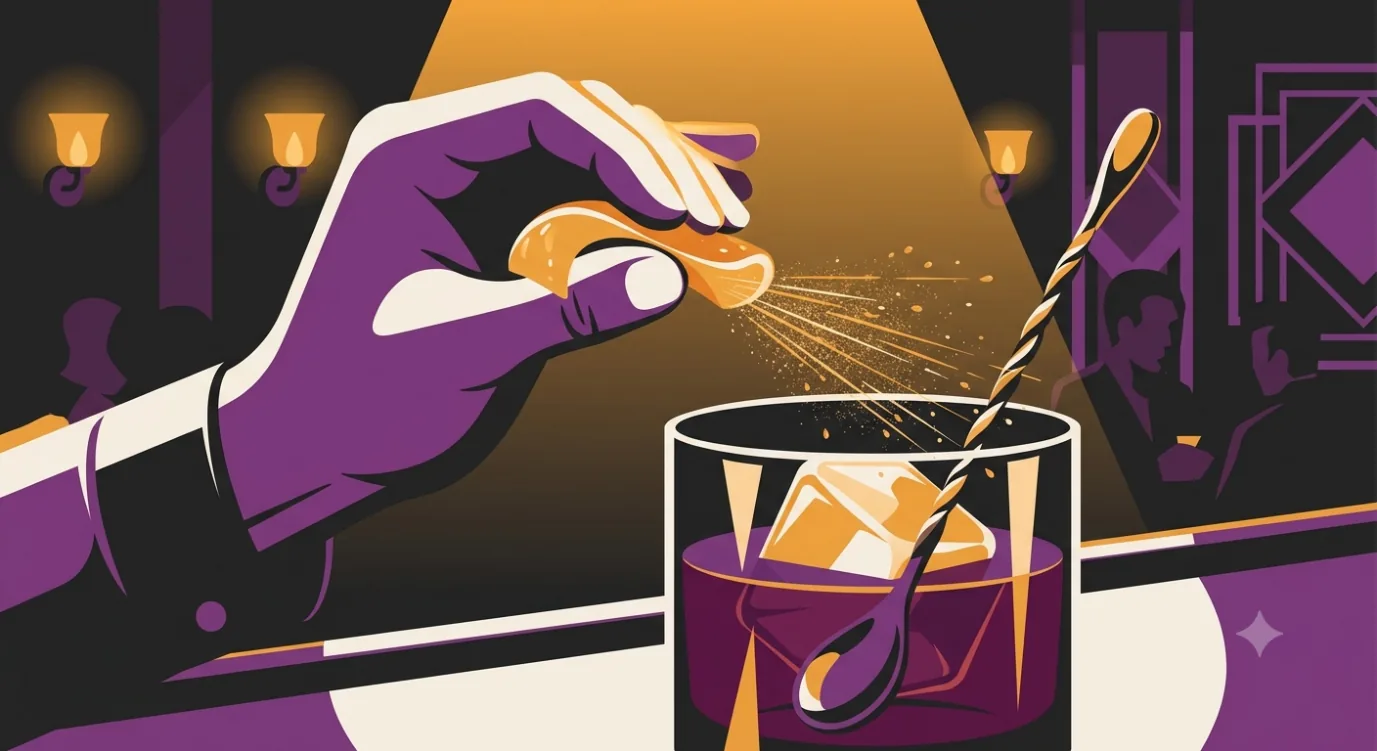
- Stir gently for 20 to 30 seconds, until the glass is properly cold and beading on the outside. You are chilling it and softening it at the same time.
- Hold the orange peel skin-side down over the drink, squeeze it sharply to spray the oils across the surface, then drop it in.
- Sip it slowly and pay attention. It will keep changing as it opens up, and the last third will taste different to the first.
If the bitter still bullies you on the first few, don't be a hero. Pull the Campari back a touch, push the vermouth up, and walk the ratio home toward equal parts over a few weeks. Nobody is grading you. And keep your vermouth in the fridge once it's open, because it's wine, it oxidizes, and a tired bottle of vermouth has ruined more Negronis than bad gin ever has.
Last Call
Give the Negroni a few honest attempts before you decide. You aren't learning to tolerate something unpleasant, you're teaching your palate to read a flavor it was never issued a manual for. Once bitter clicks, a whole shelf opens up behind it: amari, aperitivi, all the good stuff hiding at the back of the bar.
The first one is a handshake. The tenth one is a friendship. Pull up a stool and start counting.