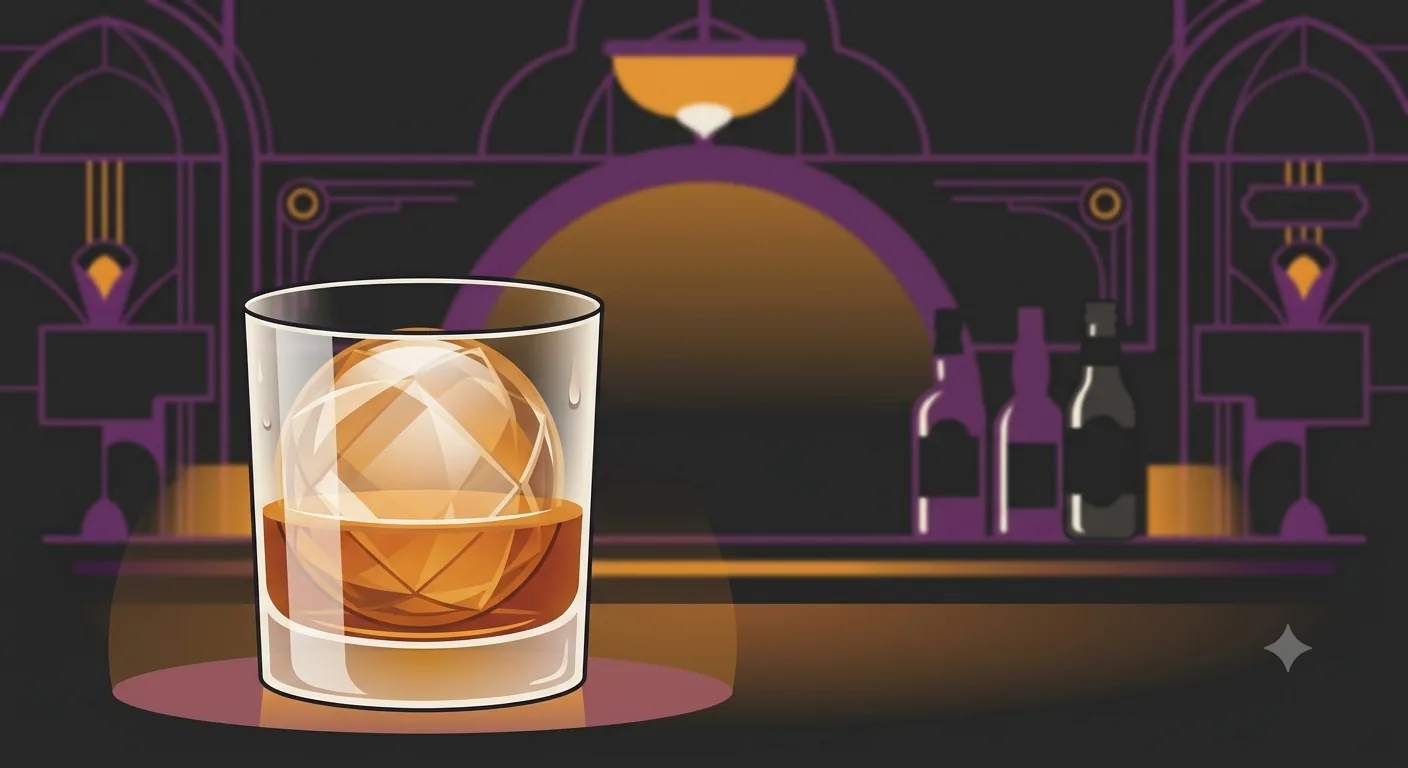
A regular of mine once spent a small fortune on a bottle of rye, carried it home like a newborn, then drowned it in a scoop of freezer ice so old it had taken on the flavor of frozen peas and last month's leftovers. He couldn't work out why his fancy Manhattan tasted like a sad, watery bruise. I didn't have the heart to tell him the truth: the whiskey wasn't the problem. The ice was.
We fuss endlessly over spirits, bitters, and that one obscure amaro we drove across town for. Meanwhile the single ingredient that touches nearly every cocktail we make, the one doing the actual work of chilling and diluting, gets treated like an afterthought yanked from a crusty tray. Ice isn't the thing you add to a drink. On most nights, ice is the drink, quietly deciding whether it lands bright and balanced or warm and cloying by the time it reaches your lips.
The Man Who Sold Winter
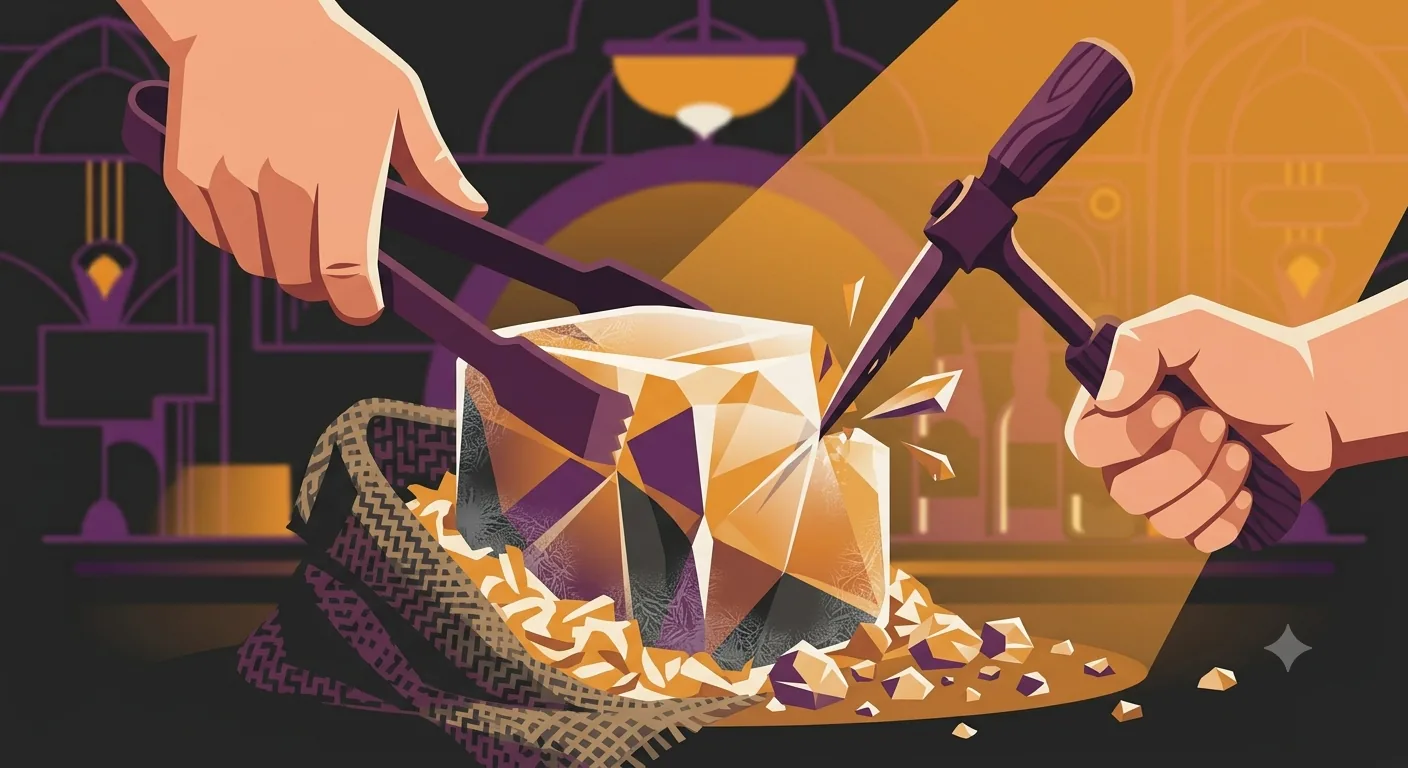
For most of human history, a cold drink in summer was a luxury reserved for kings with a mountain nearby. Then a stubborn young man from Boston named Frederic Tudor decided he would sell New England's winter to the tropics. In 1806 he shipped a load of lake ice to the Caribbean, watched most of it melt on the dock, and could barely give it away. People thought he was a lunatic. The idea eventually landed him in debtors' prison.
But Tudor was relentless. He learned to insulate ice with sawdust, built ice houses across the shipping routes, and, most cleverly of all, taught bartenders and households to want cold drinks in the first place. Give a person a chilled drink cheaply enough, often enough, and they will never go back to a warm one. By the mid-1800s his ships were hauling frozen New England ponds to Havana, New Orleans, and as far as Calcutta.
They called him the "Ice King," and his gamble quietly rewired how the world drinks. The brisk, clinking American cocktail we know today was built on the back of cheap ice that Tudor practically willed into existence.
Surface Area Is the Whole Game
Here is the part nobody tells you: ice does two jobs at once, and they pull in opposite directions. It chills your drink (good) and it waters it down (also good, in the right amount, and a disaster in the wrong one). The lever that controls both jobs is surface area.
The more surface area your ice exposes to the liquid, the faster it melts. Faster melt means faster chilling and faster dilution. That is why the exact same drink behaves like three different cocktails depending on what you drop into it:
- Crushed ice: enormous surface area. Chills in seconds and dilutes fast. Perfect when you want rapid, generous watering-down, like a julep or a tiki drink built to bloom as it melts.
- One big cube or sphere: tiny surface area for its volume. Chills slowly, dilutes slowly. Ideal for a spirit-forward drink you want to nurse for twenty minutes without it turning to soup.
- Small, half-melted tray cubes: the worst of both worlds. Loads of surface area and already wet, so they gush dilution while barely chilling. This is the freezer ice ruining your Manhattan.
So when a recipe says "shake with ice" or "stir over one large cube," that is not fussy bartender ritual. It is a dilution instruction in disguise.
And clear ice? It is not just for the photo. Cloudy cubes are packed with trapped air and tiny fractures, and every one of those cracks is extra surface area and a weak point where the cube splinters and melts unevenly. Clear ice is frozen slowly in one direction, which pushes the air and impurities out and leaves a dense, crack-free block that melts slower and more evenly. Prettier, sure. But it also simply does the job better.
Cold Is a Flavor Knob
Temperature doesn't just make a drink refreshing. It quietly rewrites how it tastes. Cold mutes sweetness, because your tongue registers sugar less at low temperatures, and it tames the hot burn of high-proof spirit. It also keeps aromatics reined in, so everything reads crisp and clean.
Let that same drink warm up and the whole thing inverts. The sugar comes roaring back, the alcohol turns hot and boozy, and aromas that were subtle turn heavy and thick. That is why a cocktail that was perfect two sips ago tastes flabby and cloying at the bottom of the glass: it got warm, and the melt got ahead of the chill. A great drink isn't only well-mixed. It is well-chilled, all the way down.
Try It Tonight: A Proper Mint Julep
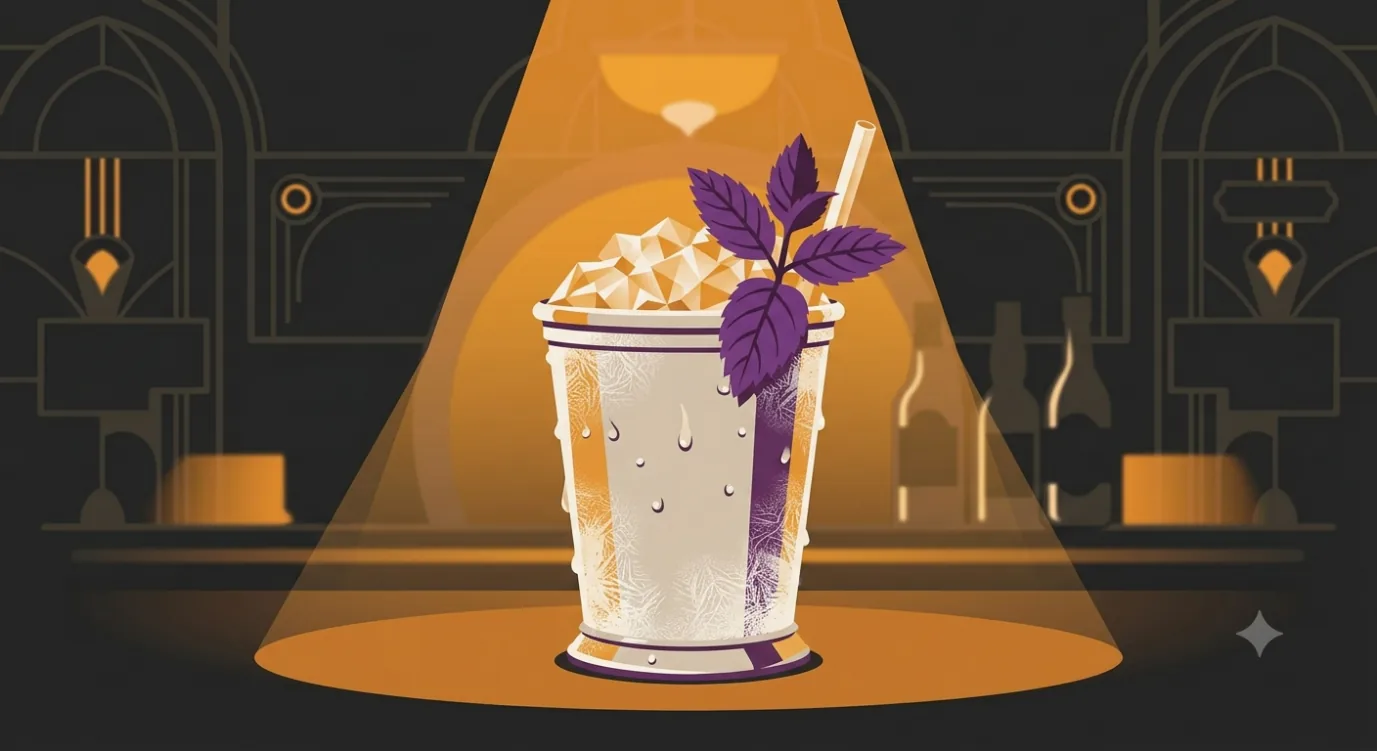
Want to feel every bit of this in one glass? Make a julep. There is no better teacher, because here the ice isn't a supporting player, it is the co-star. You build the drink on a mountain of crushed ice and let it melt into the flavor on purpose. That frost blooming on the outside of the cup is not a side effect. It is the entire point.
Ingredients
- 2.5 oz (75 ml) bourbon
- 0.5 oz (15 ml) simple syrup (equal parts sugar and water)
- 8 to 10 fresh mint leaves, plus a sprig to garnish
- Plenty of crushed ice
Method
- Add the mint leaves and simple syrup to a chilled julep cup or rocks glass. Press gently a few times with a spoon or muddler. You want to wake the mint up, not shred it to ribbons.
- Pour in the bourbon.
- Pack the cup two-thirds full with crushed ice and stir or swizzle for 15 to 20 seconds, until the outside of the cup frosts over.
- Mound more crushed ice on top into a generous dome.
- Slap a sprig of mint against your hand to wake its aroma, tuck it in beside a short straw, and sip. Notice how the drink softens and opens as the ice does its slow, delicious work.
One more trick: if you want a single clear, slow-melting rock for your next Old Fashioned, freeze water in a small insulated cooler with the lid off, sitting in your freezer for about 18 to 24 hours. It freezes from the top down, forcing the cloudiness to the bottom, and you cut a crystal-clear block off the top. No special gadgets required.
Last Call
Next time you build a drink, give the ice the same respect you hand the good bottle. Buy it fresh, keep it covered, match the format to the cocktail, and then let it do its quiet, cold, essential work. Your future self, still sipping something crisp at the very bottom of the glass, will thank you. Pull up a stool any time. There is always a cold one waiting at this counter.