Somebody once slid onto a stool at my bar, eyed the back shelf, and told me flatly that they "didn't like gin." I asked which one had wronged them. They blinked. To them, gin was a single thing - a harsh, piney slap they'd taken once at a party and never forgiven. But saying you don't like gin is like saying you don't like music. Which gin? Made how? Because unlike almost any other spirit, gin isn't defined by what it's made from. It's defined by what it's been flavored with, and that changes everything.
A Spirit Built From a Neutral Canvas
Here's the thing that trips people up. Whisky tastes of grain and barrel. Rum tastes of sugarcane. Tequila tastes of agave. But gin starts life as a clean, neutral spirit - essentially a blank canvas with almost no flavor of its own - and then walks it through a botanical greenhouse. Everything you taste in the glass was added on purpose.
There's really only one rule about what makes a gin a gin: juniper has to be the loudest voice in the room. Those little blue-purple berries (technically tiny cones from an evergreen shrub) give gin its signature pine-and-pepper snap. Everything else is the distiller's signature.
From Dutch Medicine to London Chaos
Gin didn't start as the elegant thing in your Martini. It began as medicine.
Dutch physicians in the 1600s were distilling a malty juniper spirit called genever and prescribing it for stomach and kidney ailments. Juniper was the "active ingredient" - the booze was just a very agreeable delivery system.
English soldiers fighting in the Low Countries took a shine to the stuff - the original "Dutch courage" - and carried the taste home. What happened next was less genteel. When cheap grain spirit met loosened distilling laws, 1700s London drowned in the "Gin Craze": rough, sweetened, sometimes genuinely dangerous gin sold on every corner. It took decades of reform, and eventually the cleaner column still, to civilize gin into the crisp London Dry we recognize today.
How the Garden Gets Into the Glass
So how do juniper, coriander, citrus peel, and a distiller's secret handful of roots and spices actually end up as flavor in a clear liquid? Two main methods, and the choice shapes the whole character of the gin.
- Steeping: the botanicals soak directly in the spirit before distilling, like a tea. This pulls out bold, deep, sometimes heavier flavors.
- Vapor infusion: the botanicals sit in a basket above the spirit, and only the rising alcohol vapor passes through them, picking up flavor on the way. This gives a lighter, brighter, more delicate result.
Many distillers use a mix of both, tuning each botanical for how they want it to land. That's why one gin can taste like a Christmas tree and another like a citrus grove, even though both are "just gin."
Read the Bottle Like a Bartender
Once you know the main styles, the back shelf stops being intimidating:
- London Dry: crisp, juniper-forward, bone dry. The classic. Nothing sweet added after distilling. Your Martini and G&T backbone.
- Contemporary / New Western: juniper takes a step back and lets citrus, floral, or herbal botanicals lead. Friendlier to gin skeptics.
- Old Tom: a slightly sweeter, rounder historical style - the missing link between genever and London Dry, and the soul of many classic cocktails.
- Navy Strength: same idea, higher proof (around 57% ABV). Bolder, and it stands up in a punchy drink.
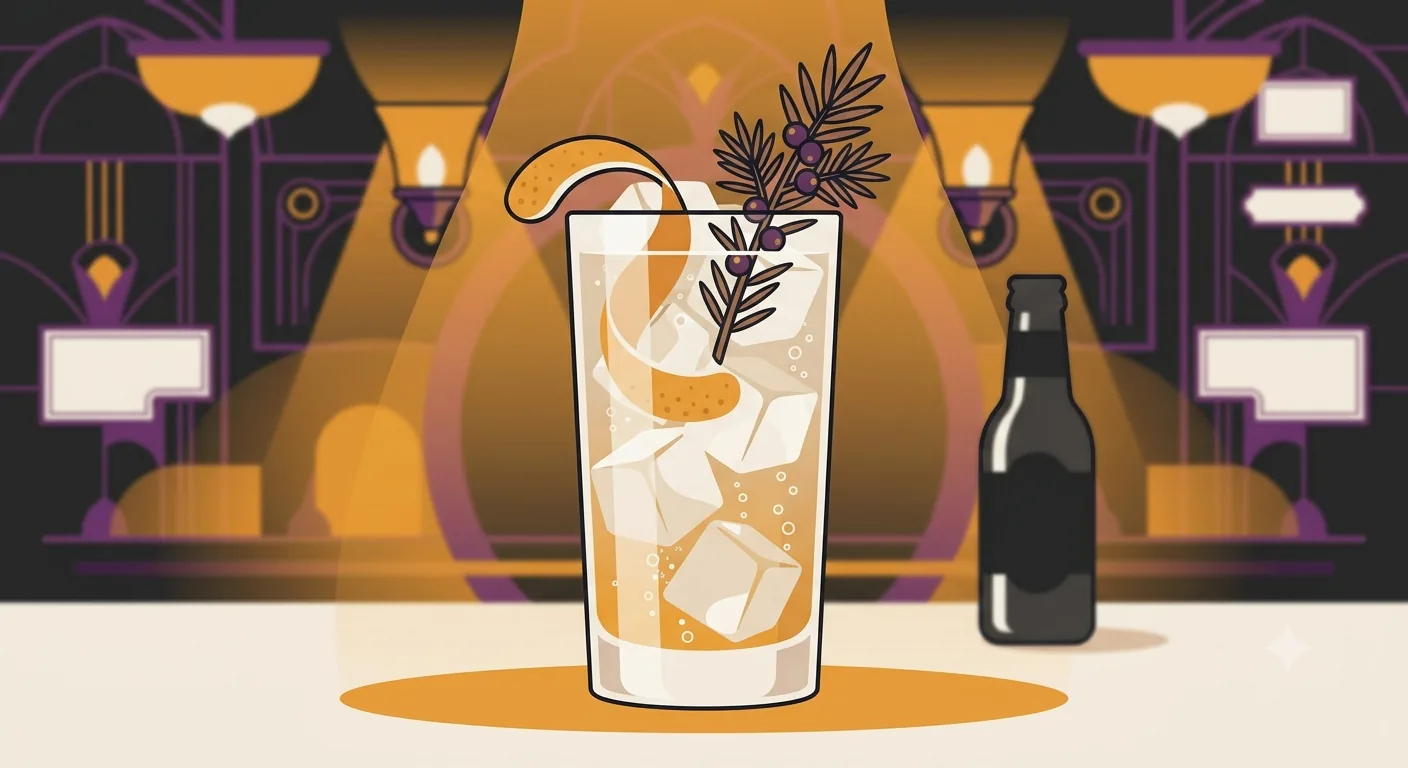
Try This Tonight: The Perfect G&T
The gin and tonic is where a good gin shows off, and it's almost impossible to make badly - unless you drown it. The single most common mistake is a limp, warm, under-iced glass. Fix that and you're most of the way there.
Ingredients
- 2 oz (60 ml) gin - a London Dry or a citrus-forward contemporary
- 4 oz (120 ml) chilled tonic water, freshly opened and fizzy
- Plenty of ice - fill the glass right up
- A wedge of lime or, better, a strip of grapefruit peel
Method
- Fill a large wine glass or highball to the very top with ice. More ice keeps it colder and, counterintuitively, melts slower.
- Pour the gin over the ice.
- Add the tonic slowly, pouring down the side of the glass to keep the bubbles alive.
- Give it one gentle stir - just once, from the bottom - so you don't knock the carbonation out.
- Express the citrus peel over the top (give it a squeeze skin-side down to spray its oils) and drop it in.
Use a fresh, fizzy tonic every time - a flat bottle that's been open in the fridge for a week is the quiet killer of the G&T. The drink is mostly tonic, so it deserves as much respect as the gin.
One Last Pour
Gin isn't one flavor - it's a whole spectrum hiding behind one word, from pine-forward classics to soft floral newcomers. So if you've ever decided gin isn't for you, I'd gently suggest you just hadn't met the right bottle yet.
Next time you're staring at that back shelf, pick one you've never tried and read what's in it. There's a garden in there waiting for you. Pull up a stool and I'll pour you another.