
There's a quiet test I run whenever a new bartender steps behind my counter. I don't ask for anything flashy. No flaming garnish, no seventeen-ingredient tiki opus. I ask for a Daiquiri - the classic, three-part kind. And then I watch.
Because here's the thing: anyone can hide behind complexity. Pile on enough liqueurs, syrups, and bitters and you can bully almost any drink into tasting fine. But rum, lime, and sugar? That's a high-wire act with no net. Every choice you make - the pour, the shake, the split-second you decide it's done - shows up in the glass, naked and honest. The Daiquiri doesn't lie. It can't. There's nowhere for a mistake to go.
So let's make one properly.
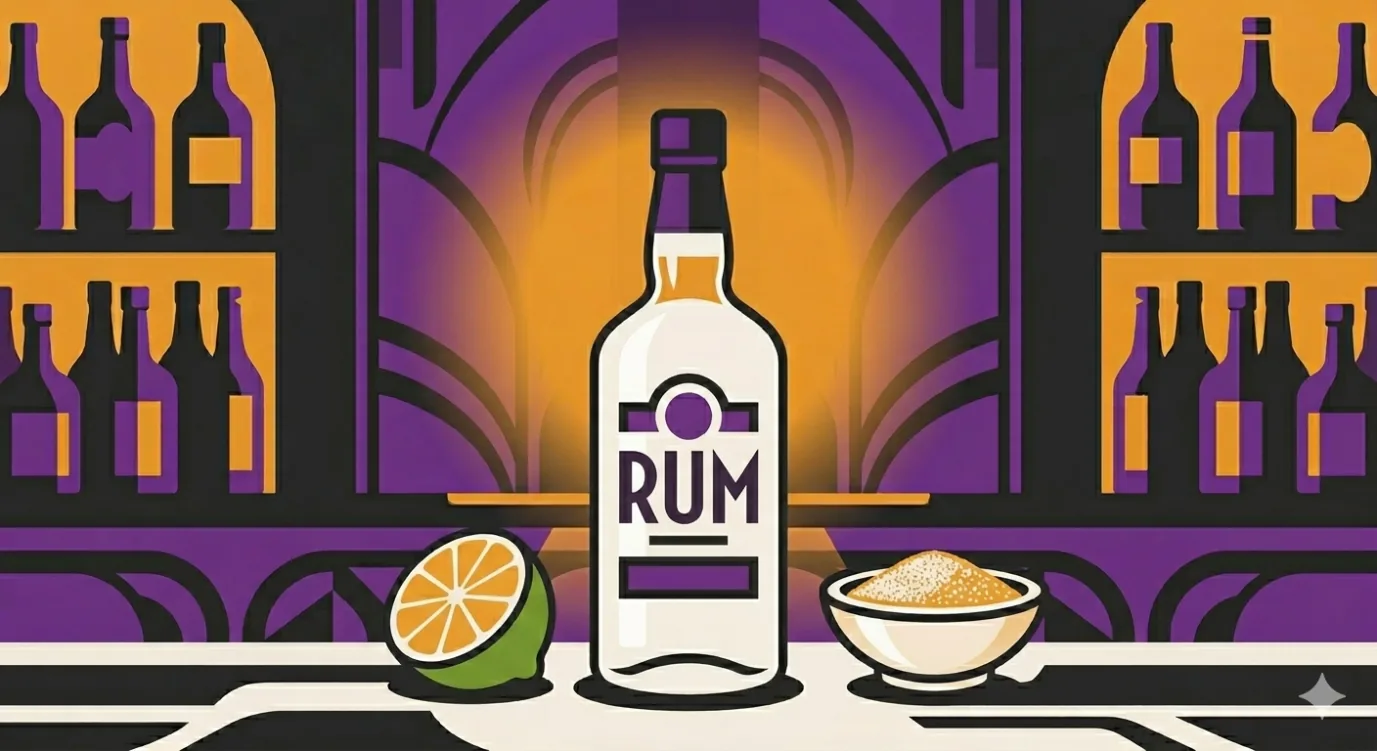
A drink born at the bottom of a mine
Forget the frozen, neon, slushie-machine version for a moment. The original Daiquiri was a working drink, dreamed up by people who'd earned it.
Sometime around 1898, an American mining engineer named Jennings Cox was running iron operations near a beach and ore town called Daiquirí, just east of Santiago de Cuba. The story goes that, short on gin to entertain guests, he reached for what the island had in abundance - local rum, limes, and sugar - and named the result after the place itself.
Whether every detail of that tale survives scrutiny matters less than what it tells us: this was never meant to be precious. It was good rum, made brighter and more drinkable under a Caribbean sun. That's the spirit to keep in mind. We're not building a monument. We're building something you'd actually want to drink twice.
Why this drink is shaken - and why that matters more than you think
People love to argue shaking versus stirring like it's a personality trait. It isn't. It's physics.
You shake any drink with fresh citrus in it, full stop - and the Daiquiri is the reason why. Shaking does two jobs at once, and both are non-negotiable here:
- Chilling. Obvious, but only half the story.
- Dilution and texture. This is the part beginners miss. As the ice fractures and aerates the drink, it folds in a precise amount of water and a cloud of tiny bubbles that lighten the whole thing.
That water isn't an accident or a dirty secret - it's an active ingredient. Lime juice is aggressive. Under-shake your Daiquiri and you get a sharp, thin, puckering thing that bites before it charms. Over-shake it - or shake with sad, half-melted ice - and you drown it into watery nothing. The skill is the window in between, and it's narrower than you'd like.
My rule: hard, committed shaking with fresh, dry ice straight from the freezer, for about 10 to 12 seconds - until the tin is painfully cold and frosted over. You're not politely rocking it to sleep. You're waking it up.
The triangle that runs everything
Strip almost any great sour back to its bones and you find the same three-cornered balance: sweet, sour, strong. The Daiquiri is that triangle with the lights on and nothing else in the room.
Here's the insider bit. Lime doesn't just add "sourness" - its acidity actually sharpens your perception of the rum, making it taste more like itself: grassier, funkier, more alive. The sugar isn't there to make the drink sweet; it's there to round off lime's hard edges so the rum can step forward. Pull any one corner out of true and the whole thing collapses. Too much sugar and it's flabby and dull. Too much lime and it's a wince. Get them in tension, and the rum sings.
Make one tonight

A genuinely great Daiquiri takes about ninety seconds and zero special equipment beyond a shaker.
The Classic Daiquiri
Ingredients
- 2 oz (60 ml) white rum - reach for something with character, not just a neutral pour
- 1 oz (30 ml) fresh lime juice - squeezed tonight, never bottled
- ¾ oz (22 ml) simple syrup (equal parts sugar and water, by volume)
Method
- Add all three ingredients to a shaker.
- Fill with fresh, hard ice - the more, the better; a full tin shakes colder and dilutes more cleanly than a sad handful.
- Shake hard for 10–12 seconds, until the tin is frosted and aching to the touch.
- Double strain into a chilled coupe (a fine-mesh strainer catches the ice shards and pulp, leaving it silky).
- No garnish required, but a lime wheel or a small twist is welcome.
Taste it and adjust - out loud, like a pro. Too tart? A barspoon more syrup. Too soft and sweet? A few more drops of lime. That tiny calibration is the craft. Do it a dozen times and your palate stops guessing.
One last pour
The beautiful thing about a drink with nowhere to hide is that, once you can make it, you can make almost anything. Master the Daiquiri and you've quietly mastered the entire family of sours - the Margarita, the Whiskey Sour, the Gimlet - because they're all just this triangle wearing different clothes.
So pour one for yourself this week. Taste where it's true and where it wobbles. The Daiquiri will tell you everything you need to know - you just have to listen. Pull up a stool anytime; there's always one more on the counter.